Arabic Tashkeel (Diacritics) Explained: Fatha, Damma, Kasra & More
A clear guide to Arabic tashkeel — the short vowel and diacritic marks (fatha, damma, kasra, sukun, shadda, tanween). Learn what each means and how to type them.
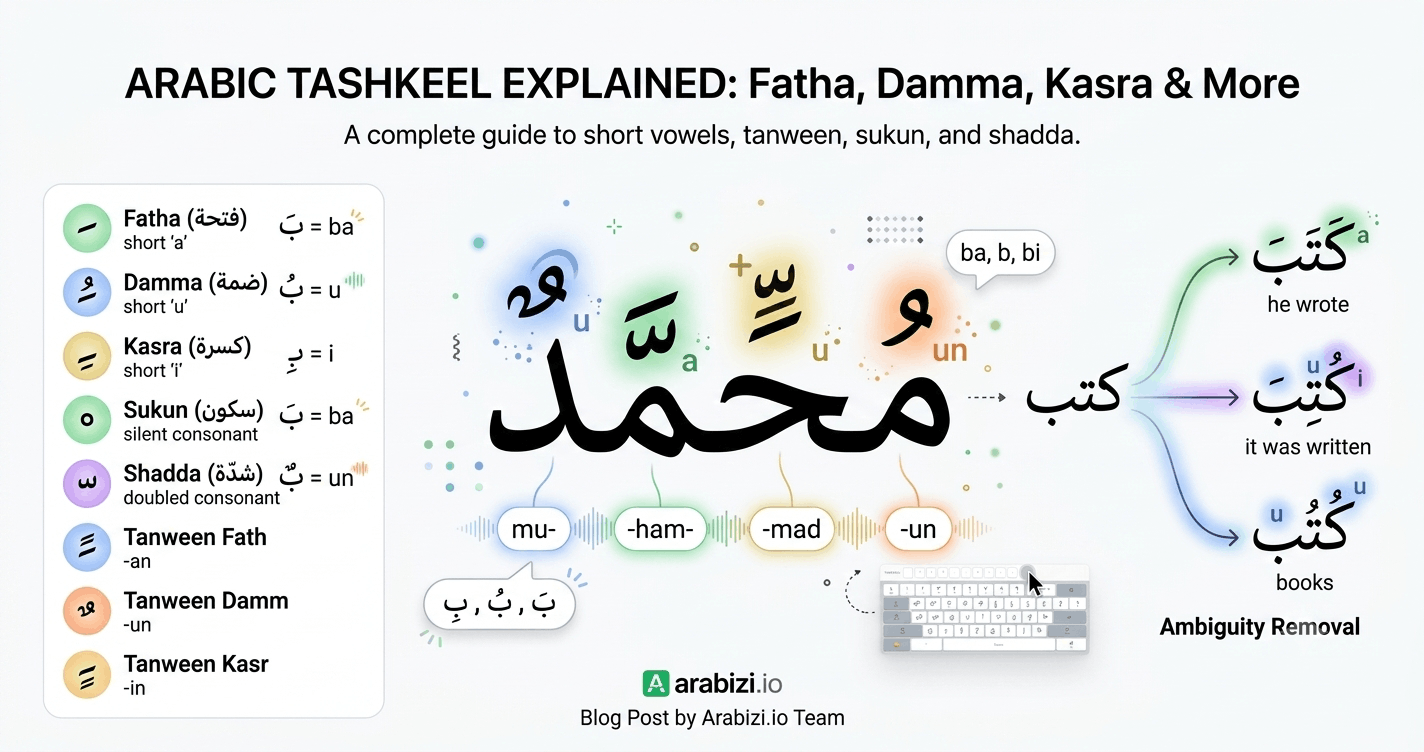
Arabic is usually written without short vowels — fluent readers infer them from context. But for learners, the Quran, children's books, and any text where pronunciation must be exact, those vowels are written as small marks above and below the letters. These marks are called tashkeel (تشكيل) or harakat (حركات).
The short vowels (harakat)
There are three short vowels in Arabic:
| Mark | Name | Sound | Example |
|---|---|---|---|
| َ | Fatha (فتحة) | short "a" | بَ = "ba" |
| ُ | Damma (ضمة) | short "u" | بُ = "bu" |
| ِ | Kasra (كسرة) | short "i" | بِ = "bi" |
The fatha sits above the letter, the damma is a small waw above it, and the kasra sits below.
Tanween (nunation)
Tanween doubles a short vowel and adds an "-n" sound at the end of a word — common in indefinite nouns:
| Mark | Name | Sound |
|---|---|---|
| ً | Tanween Fath | "-an" |
| ٌ | Tanween Damm | "-un" |
| ٍ | Tanween Kasr | "-in" |
For example, كتابٌ = kitābun ("a book").
Other essential marks
| Mark | Name | What it does |
|---|---|---|
| ْ | Sukun (سكون) | shows the letter has no vowel |
| ّ | Shadda (شدّة) | doubles (geminates) the consonant |
| ٰ | Dagger alif | a hidden long "a" (e.g. هٰذا) |
| ـ | Tatweel | stretches a letter for spacing (decorative) |
The shadda is especially important — it can change meaning. Compare دَرَسَ (darasa, "he studied") with دَرَّسَ (darrasa, "he taught"): the shadda on the middle letter changes the whole word.
Why tashkeel matters
- Pronunciation: the same consonants can be read multiple ways. كتب can be kataba ("he wrote"), kutiba ("it was written"), or kutub ("books"). Tashkeel removes the ambiguity.
- Learning: beginners rely on harakat until they can predict vowels from grammar.
- Sacred and poetic texts: the Quran and classical poetry are fully vocalized for precise recitation.
How to type tashkeel
On a physical Arabic keyboard, diacritics live on the shift layer, which makes them hard to find. The easier route:
- Open the Arabizi.io keyboard.
- Type or transliterate your word.
- Place the cursor after a letter and click the diacritic in the dedicated Tashkeel row — fatha, damma, kasra, shadda, sukun, tanween, and more are all one click away.
You can even build fully vocalized words like مُحَمَّدٌ this way, without hunting through shift states.
Tip: automatic vowels
If you want vowels added for you as you type, see our guide on adding Arabic vowels automatically.
Quick practice
Try typing these and adding the marks yourself on the keyboard:
- سَلَام (salām — peace)
- كِتَاب (kitāb — book)
- مُعَلِّم (muʿallim — teacher; note the shadda on ل)